

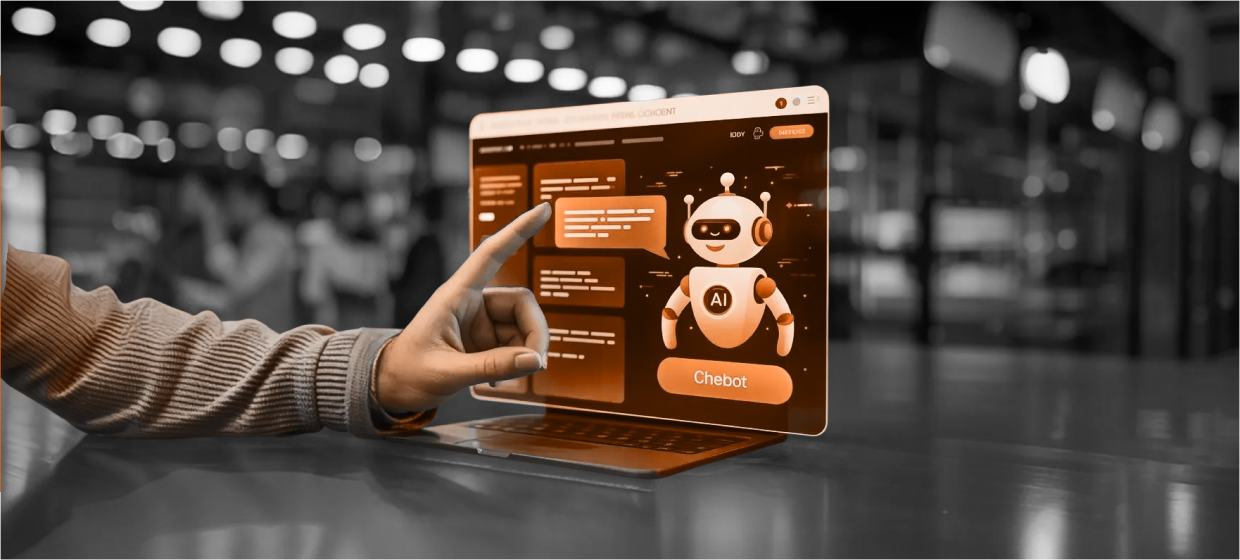
If you’ve been on a UAE business website lately — whether it’s a luxury hotel in Dubai, an e-commerce store in Sharjah, or a real estate portal in Abu Dhabi — you’ve likely been greeted by a little chat bubble in the corner of your screen. You type in a question, and within seconds, you get a detailed, polite, and often surprisingly helpful answer.
No long hold music. No “we’ll get back to you in 24 hours.” Just instant service.
But here’s the twist: it’s not a human behind that message. It’s an AI-powered chatbot — and it’s quietly changing the way customer service works in the UAE.
Why UAE Businesses Are Embracing Chatbots
In a country where convenience is almost a way of life, speed matters. Customers expect to book a table, track a delivery, or confirm a property viewing in seconds — not hours. Businesses are responding by bringing in chatbots that are available around the clock, never lose patience, and can juggle dozens (or hundreds) of conversations at once.
It’s not just about efficiency. The UAE’s push for digital transformation — backed by initiatives like the UAE AI Strategy 2031 — means companies here are quicker to adopt technology that streamlines service and enhances customer experience. Chatbots fit perfectly into this vision.
From Simple Scripts to AI Problem-Solvers
Gone are the days when chatbots were just a glorified FAQ section. Today’s AI-powered versions can:
- Understand Arabic and English naturally (and even switch mid-conversation).
- Recognise customer intent, not just keywords.
- Pull up personalised product recommendations in seconds.
- Handle payments, bookings, and order tracking without a single human hand involved.
It’s a bit like having your most experienced customer service rep cloned into a digital assistant — one that never sleeps.
The UAE Twist: Culture Meets Technology
One thing that sets UAE chatbots apart is how they blend global tech with local service culture. In a society that values hospitality and personal attention, AI is being trained to respond with warmth and respect. That means using culturally appropriate greetings, accommodating Ramadan schedules, and offering bilingual support without missing a beat.
Picture this:
A customer browsing for a luxury villa in Dubai gets instant answers in Arabic, an appointment booked with a preferred agent, and a WhatsApp reminder — all before they’ve finished their morning coffee.
Do Chatbots Replace Humans? Not Exactly
There’s a misconception that AI-powered customer service means no humans at all. In reality, the best systems in the UAE work on a hybrid model:
- The chatbot handles the quick, repetitive questions.
- The human team takes over for more complex, emotional, or high-value conversations.
It’s about freeing up people to do what they do best — while AI does the heavy lifting in the background.
The Numbers Don’t Lie
Here’s why so many UAE businesses are making the shift:
- Brands using AI chatbots often see response times cut in half.
- Customer satisfaction can jump by 30% when live chat is available 24/7.
- Bilingual chatbots in the UAE see up to 40% more engagement than English-only bots.
- Some e-commerce brands report triple the number of captured leads compared to using forms alone.
The bottom line? In a region where customer expectations are sky-high, AI chatbots aren’t just a nice extra — they’re becoming essential. They offer the speed, personalisation, and round-the-clock support that customers now expect as standard.
At digiboost, we don’t just install chatbots; we design them to feel like an extension of your brand. The kind of digital assistant that makes customers feel heard, valued, and ready to buy — without ever waiting on hold.